Swatch card No. SW-8904 · cut October 14, 2026
Brands & Retail BusinessMill spec card
Bloomingdale's Books Record $922M Q2, Bron Pegs 25% to Rival Woes
Bloomingdale's posted $922M in Q2 comparable sales, up 11.3% YoY and a brand record. CEO Olivier Bron attributed roughly 25% of recent gains to rival distress at the Wharton summit.
- Fiber
- Brands & Retail Business
- Count
- 3 min read
- Cut
- Weight
- 666 words
Spec notes
- Bloomingdale's Q2 comparable sales: $922 million, up 11.3 percent year-over-year, highest in brand history
- Bron attributes roughly 25 percent of recent performance to disruption at the Exemplar Luxury Group, which emerged from Chapter 11 in June
- Eighty percent of Bloomingdale's products move through wholesale buys; 20 percent under the concession model
- Eighty percent of Bloomingdale's digital sales originate in ZIP codes with a physical store
- Operator runs 60 doors: 31 full-line stores, 25 outlets, and four Bloomie's small-format locations; 2025 volume estimated near $4 billion
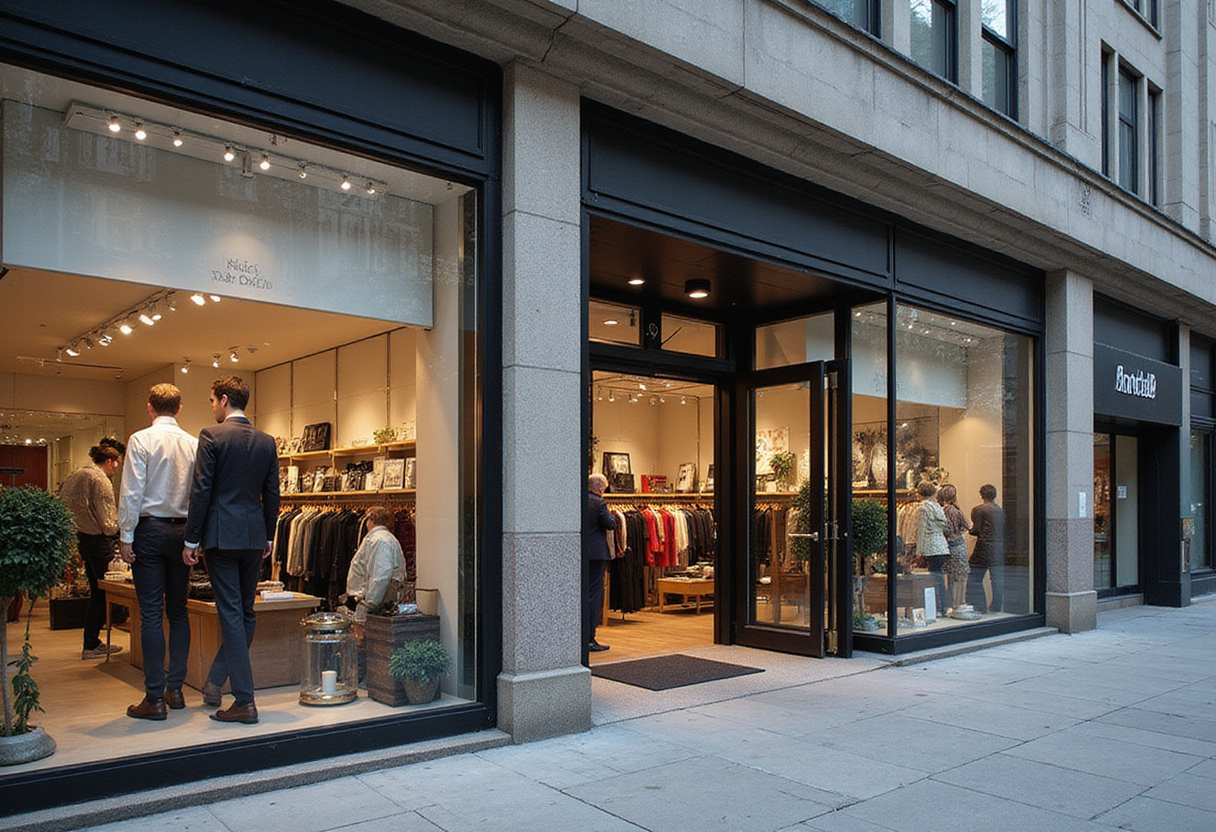
Bloomingdale's booked $922 million in second-quarter comparable sales, up 11.3 percent year-over-year. The total marks the highest Q2 in the department-store operator's history. CEO Olivier Bron disclosed the figure Thursday at the Wharton Baker Retailing Center CEO Summit in Manhattan, in conversation with Christine Barton of Boston Consulting Group.
How much growth came from competitors' pain?
Bron pegged roughly 25 percent of recent performance at distributor-rival disruption. He cited the Exemplar Luxury Group — operator of Saks Fifth Avenue, Neiman Marcus and Bergdorf Goodman — which emerged from Chapter 11 in June.
"We know some competitors have been unfocused recently, which gives us some room and some opportunities," Bron said. "Probably 25 percent of this performance is due to the challenges that others faced at some point over the past 12 to 24 months."
The remaining 75 percent, Bron said, comes from "strategy." He left that strategy undefined on the record. Wholesale terms, vendor commitments, and unit buys went unmentioned.
Why does wholesale still anchor the assortment?
Eighty percent of Bloomingdale's products move through wholesale buys, Bron said. The operator carries the inventory risk and the markdown exposure. Concessions (brand-operated shops-in-shop paying rent to Bloomingdale's) account for the remaining 20 percent.
"Retail and particularly fashion retail is about taking risks," Bron said. "Over the last three years, we took some risks in buying or investing in some not so short-term ROIs."
Wholesale bleeds margin in markdown seasons. It prints margin when forecasting holds. Bloomingdale's footprint — 31 full-line stores, 25 outlets, four Bloomie's locations — gives buying scale, but it concentrates markdown liability in any quarter where consumer tastes misfire.
What does the digital-store overlap say about sourcing?
Bron reported that 80 percent of Bloomingdale's digital sales originate in ZIP codes with a physical store. The ratio functions as a store multiplier for sourcing teams. Close a door and the e-commerce lines feeding that catchment area probably compress faster than lease savings.
"If you close your eyes and think about your best experience at Bloomingdale's, you will never refer to that big nice brown box delivered to your front door," Bron said. "Investing in our stores is really reinforcing our digital business."
For vendors, the link privileges assortments built for in-store discovery over SKUs designed for steady online replenishment. Door-count decisions now carry an e-commerce multiplier that pure digital channels do not.
How is Bron framing the macro?
Bron credited a "K-shaped" U.S. economy — a pattern in which higher-income households accelerate while lower-income ones contract — for the current luxury lift. He contrasted the U.S. trajectory against softer Europe and Asia, naming no regional comparable sales figure.
"The economy is not bad for us," Bron said. He added that net promoter scores (a customer-loyalty metric tracking how likely buyers are to recommend a brand) sit at a record high.
Caveat follows: NPS gains can lag a competitive sales windfall, and Bloomingdale's disclosed no sample size, no weighting, and no benchmark cohort on the summit stage.
What did Bron leave off the table?
Bron did not address tariffs, freight, or the 2026 sourcing calendar during the on-record remarks. That silence is a data point for buyers tracking how the operator plans to negotiate duty exposure with vendors as the federal tariff schedule evolves.
What's the 2026 signal?
Bron called 2025 "the new high-water mark" for Bloomingdale's. He projected 2026 to run "well above that" without offering a percentage. Industry estimates place the banner's 2025 volume near $4 billion. A repeat of Q2's 11.3 percent comp through next year would clear roughly $4.45 billion, assuming the 25 percent competitor-driven tailwind holds.
The forward call belongs to the buyer, not the CEO: vendors budgeting 2026 should treat roughly a quarter of last year's tailwind as non-repeatable and size commitments against that haircut.
via WWD (Source)
More from Priya Raman
Show full bio
Correspondent covering people, launches and day-to-day practice in fashion industry as a trade and business at The Fabric Brief.
211 articles