Swatch card No. SW-2714 · cut October 15, 2026
Trade & TariffsMill spec card
US 50% Tariffs on $27.6B of Canadian Goods Squeeze Importers
Washington's 50% tariffs on $27.6B of Canadian goods and Ottawa's Sept. 8 countermeasures force importers into product-level tariff, origin and landed-cost reviews.
- Fiber
- Trade & Tariffs
- Count
- 4 min read
- Cut
- Weight
- 724 words
Spec notes
- The U.S. imposed 50% tariffs on $27.6 billion of Canadian goods in August.
- Canada's countermeasures on an equivalent value of U.S. imports took effect Sept. 8.
- Additional U.S. restrictions on nearly $1 billion of Canadian imports took effect Sept. 29.
- USMCA qualification does not automatically exempt goods from additional duties.
- An Oct. 11 AP report cited U.S. manufacturers absorbing millions in added tariff and transport costs.
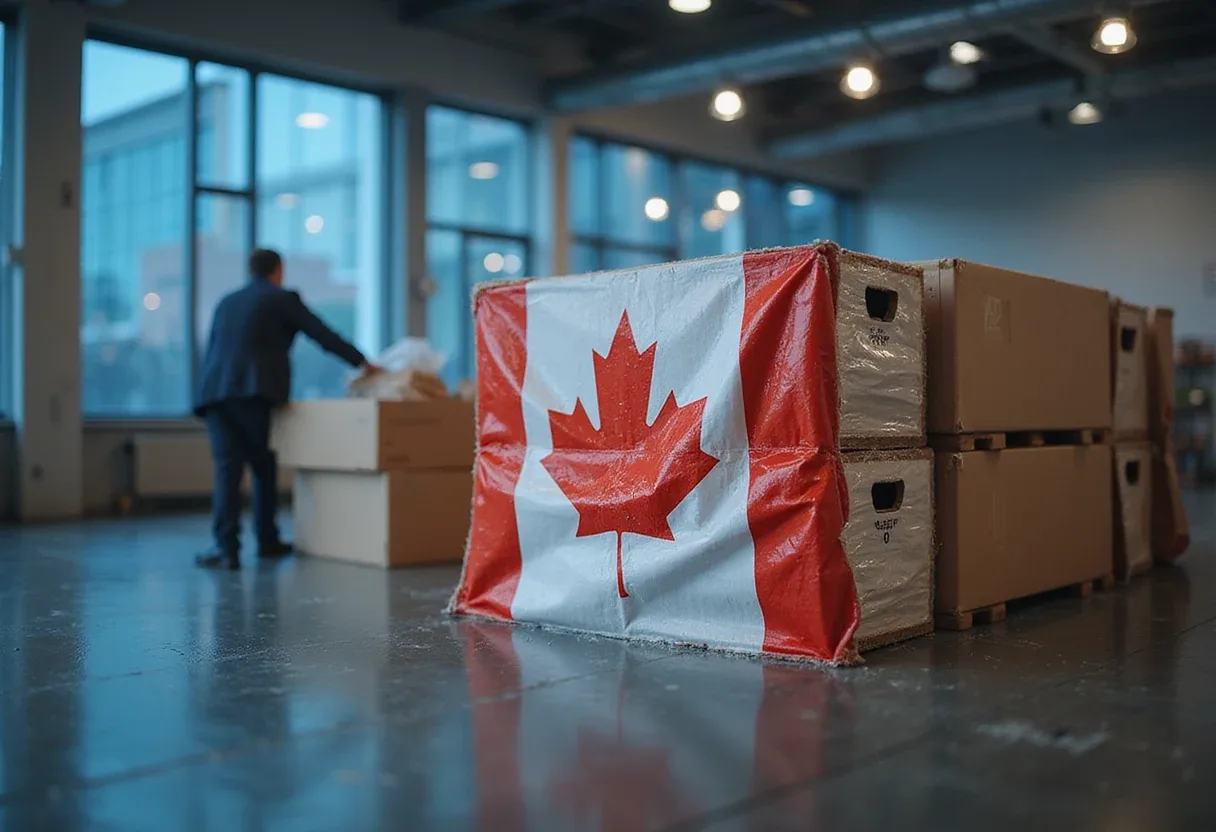
The U.S. imposed 50 percent tariffs on $27.6 billion worth of Canadian goods in August. Canada answered on Sept. 8 with countermeasures covering an equivalent value of U.S. imports, and nearly $1 billion in additional U.S. restrictions on Canadian goods took effect Sept. 29, according to an analysis by Quickcode.ai founder and CEO Shannon Hynds.
For apparel and textile importers moving goods across the northern border, the measures extend well beyond the duty itself. Each company must now determine which products are covered, calculate the financial exposure and confirm customs declarations match current requirements — while rising transportation costs and unpredictable policy shifts complicate cost forecasting and procurement planning.
Hynds argues that customs compliance and commercial decision-making can no longer run on separate tracks.
Why broad product categories no longer work
Tariff treatment varies by Harmonized Tariff Schedule classification, country of origin, customs value and the specific measures in force. A policy change does not alter a product's classification, but it can change the duties attached to that classification. Canada maintains its own customs tariff, so importers must verify requirements market by market.
The review burden falls hardest on businesses with large or frequently changing product catalogs. Vague descriptions of materials, composition, function or manufacturing characteristics make correct classification — and duty determination — harder to establish. Past customs entries offer guidance, but Hynds warns that historical treatment should not substitute for reviewing current requirements.
Shipping point is not country of origin
Goods shipped from a Canadian warehouse are not automatically Canadian-origin, and products dispatched from the U.S. may have been manufactured elsewhere. Origin rules depend on customs requirements and, in many cases, the product's manufacturing history — a critical distinction for supply chains where raw materials, components and finished goods cross borders at different stages.
Hynds recommends importers:
- Maintain documentation supporting origin determinations, including supplier and manufacturing records
- Evaluate USMCA eligibility separately from other tariff measures
- Review the terms of each specific measure before assuming preferential treatment exempts a product from additional duties
What sits behind the headline rate?
The real cost question is total landed cost, not the announced percentage. An October 11 Associated Press report described U.S. manufacturers absorbing millions of dollars in additional tariff expenses while also facing higher transportation costs from rising fuel prices amid the Iran war.
Every importer now faces the same set of commercial decisions, Hynds writes: how much added cost the business can absorb, whether customers will accept higher prices, whether supplier negotiations can offset part of the increase, and whether alternative sourcing improves the economics without introducing new operational risks.
The answers require product-level analysis. Exposure can be substantial in one category and minimal in another, and it varies among suppliers, purchase orders and business units. Where multiple tariff programs, trade remedies or exemptions may apply, companies must assess the relevant requirements together rather than relying on a single headline rate.
Making regulatory monitoring operational
Tracking policy changes is only useful if companies can map them to actual imports. Hynds advises a standing process connecting tariff schedules, customs notices and regulatory updates to product catalogs and customs entries, with trade compliance, procurement, logistics and finance teams all involved.
Reliable product data underpins the effort. Commercial invoices, packing lists, bills of lading and origin documentation should be consistent, and classification decisions should carry enough supporting information to survive scrutiny. For companies managing thousands of products, manual reviews become difficult to sustain as requirements change; accessible records and clear review procedures let businesses prioritize higher-risk items before discrepancies generate added costs or delays.
Sourcing shifts carry their own risks
Tariff uncertainty pushes companies to reconsider suppliers, manufacturing locations, inventory strategies and distribution arrangements, but relocation is not a clean fix. Alternative suppliers may bring longer lead times, different production costs, quality concerns or additional compliance requirements. Warehouse location alone does not determine tariff treatment.
Hynds counsels comparing scenarios on full costs — current tariff exposure, potential policy changes, supplier capacity, customer demand and transition costs — before moving production or inventory.
The U.S. and Canada remain deeply connected through manufacturing and cross-border commerce, and importers that pair accurate classifications, documented origin determinations and continuous regulatory monitoring with landed-cost analysis and procurement planning will be best positioned to identify exposure and respond as trade conditions keep shifting.
via ksnt.com (Original)
More from Marcus Bennett
Show full bio
Senior reporter covering money, funding and market shifts around fashion industry as a trade and business at The Fabric Brief.
197 articles
Also on the board
- Apparel CEO Flags U.S.-Canada Tariffs as Supply Chain Pressure Builds
- Canada Sets Counter-Tariffs on US Goods for September 8
- Proposed 50 Percent Tariff Looms Over Canadian Garment Supply Chains
- Canada Answers US Steel Tariffs With 50% Levy on $71 mn Apparel Flows
- Trump's 50% Canada Tariff Targets Textiles and Apparel